Postgres and Open Source Experts

Anytime. Anywhere. Since 1997.

Blog

Critical Security Alert: Immediate Action Required for Self-Hosted SharePoint Servers (CVE-2025-53770)

A critical, newly disclosed, and actively exploited vulnerability, CVE-2025-53770, affects all self-hosted / on-premises Microsoft SharePoint Server versions. This critical issue does not impact SharePoint Online (Microsoft 365).

The exploit enables attackers to:

  • Bypass authentication
  • Install persistent backdoors
  • Launch ransomware
  • Steal sensitive data

Immediate Steps to Take:

  • Patch all on-premises SharePoint servers immediately following Microsoft guidance
  • Disconnect unpatched servers from the Internet immediately
  • For versions older than SharePoint 2016: …

Part 6: Prevention and Monitoring Strategies

Part 6: Prevention and Monitoring Strategies

PostgreSQL’s autovacuum is a silent guardian until it fails. In this final post of our autovacuum series, we tackle two often-overlooked scenarios that can lead to database downtime: temp tables in multi-database clusters and lingering sessions with temp tables. Learn practical prevention tactics and monitoring strategies to keep your cluster safe from XID wraparound and emergency shutdowns.

Part 5: Temp Tables and XID Wraparound in Single-DB Clusters

Part 5: Temp Tables and XID Wraparound in Single-DB Clusters

Even in single-database setups, temp tables can quietly lead to major problems. In this post, we break down how long-lived temp tables contribute to XID wraparound risk, why PostgreSQL shuts down to protect against it, and what proactive steps you can take to avoid unexpected downtime.

Part 4: Debugging Limitations in RDS and Cloud Environments

Part 4: Debugging Limitations in RDS and Cloud Environments

Part 4 of our PostgreSQL Autovacuum Failure Series explores how session-level temp tables in RDS can silently stall autovacuum—and how we resolved it. Learn why monitoring and visibility are critical in managed cloud environments.

PgManage 1.3 Release: Powerful New Features and Enhanced Usability

PgManage 1.3 Release: Powerful New Features and Enhanced Usability

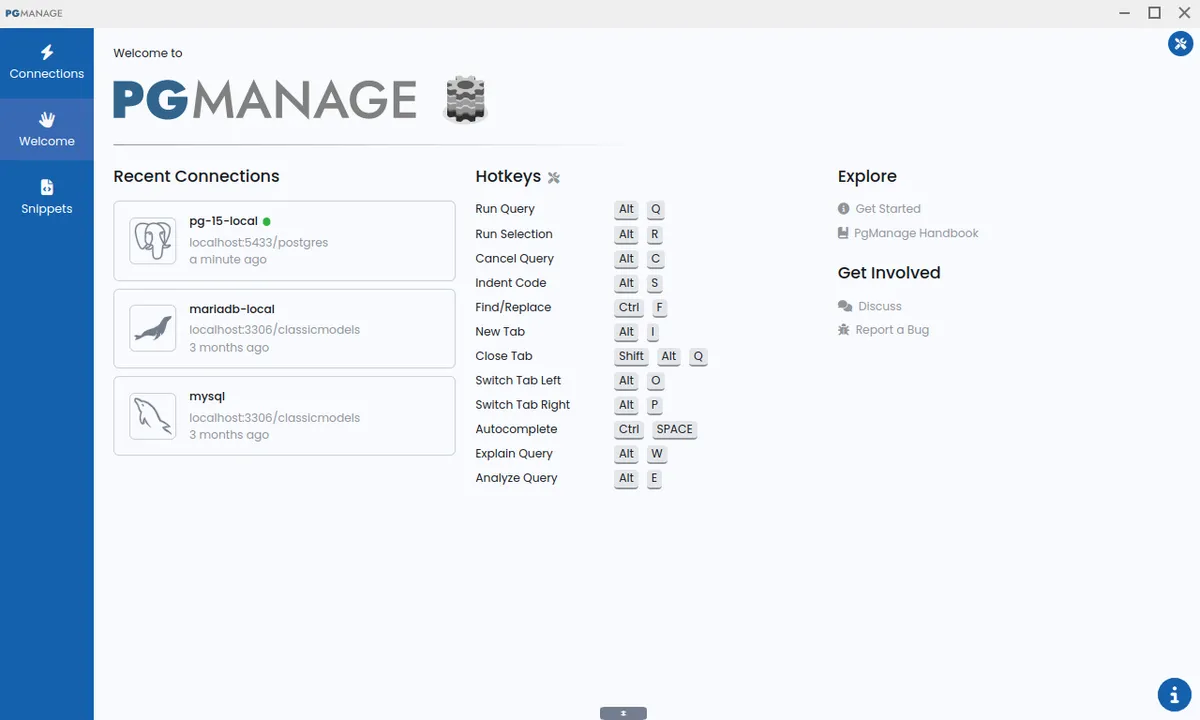
PgManage 1.3 is here with major updates including a redesigned dashboard UI, JSON export, code folding, PostgreSQL 17 support, and more. This release focuses on usability, performance, and cross-database compatibility, enhancing your workflow whether you're using PostgreSQL, MariaDB, MySQL, or others.

Part 3: Why Autovacuum Stops — PostgreSQL Internal Mechanics Explained

Part 3: Why Autovacuum Stops — PostgreSQL Internal Mechanics Explained

Series Summary: This is Part 3 of a multi-part series on PostgreSQL autovacuum failures.

In Part 2, we reproduced the autovacuum failure issue — now let’s understand why it happens. This post dives into PostgreSQL internals, explaining how autovacuum allocates its resources and why certain databases get “stuck” in maintenance limbo.

Why Does This Occur?

This behavior stems from how the autovacuum daemon allocates its resources. Autovacuum identifies the …

Part 2: Reproducing and Diagnosing Autovacuum Failures

Part 2: Reproducing and Diagnosing Autovacuum Failures

Series Summary: This is Part 2 of a multi-part series on PostgreSQL autovacuum failures.

In Part 1, we introduced the scenario where autovacuum mysteriously halts in a multi-database PostgreSQL cluster. Now, we’ll reproduce the issue using a lightweight test setup. This walkthrough will help you see the failure in action and understand how quickly your system can degrade.

How to Reproduce the Problem (and Watch PostgreSQL Go Sideways)

Let’s …

Part 1: When Autovacuum Silently Fails Across Databases

Part 1: When Autovacuum Silently Fails Across Databases

This blog series examines PostgreSQL autovacuum failures, focusing on temp tables and multi-database edge cases that cause bloat, slowdowns, or XID wraparound risks in complex environments.

The Freedom to Choose: Why Vendor-Neutral Consulting Matters

The Freedom to Choose: Why Vendor-Neutral Consulting Matters

Background

On a recent call, a potential client shared their frustrations with the high costs and limitations of their managed services cloud platform. While reaching out to potential support providers, they often encountered companies that only supported PostgreSQL's community edition or pushed their closed-source editions. This experience highlighted the need for a consulting partner who takes a vendor-neutral approach.

Command Prompt prides itself on integrity, discipline, and excellence. We’re straight …

Navigating Compliance in Regulated Industries

Navigating Compliance in Regulated Industries

Command Prompt: Your U.S.-Based Partner for Navigating Compliance in Regulated Industries